

Quick answer
Eat beyond the hotel or one famous dish. A strong food trip in Curaçao mixes local staples, markets or casual vendors, regional seafood or produce, and contemporary restaurants — with enough flexibility for what is seasonal and locally recommended.
Start with the food culture
The best food trip in Curaçao is not a checklist of dishes eaten in one restaurant. Mix local breakfasts, markets or roadside stops, seafood where it makes geographic sense, traditional dishes, contemporary chefs and at least one place where the atmosphere is part of the experience. Ask what is seasonal and what locals actually order there.
Local dishes and flavours to know
Keshi yena
A cheese-based baked dish filled with seasoned meat or other ingredients and one of the ABC islands’ signature foods.
Stobá
Slow-cooked stews made with beef, goat or other ingredients are common local comfort food.
Funchi
Cornmeal accompaniment served with stews and fish.
Tutu
A cornmeal-and-bean preparation with a softer, richer profile than plain funchi.
Pastechi
Fried pastry filled with cheese, meat or fish, often eaten at breakfast or as a snack.
Kabritu
Goat dishes are a strong part of Curaçao’s food tradition.
Sòpi dishes
Soups and stews vary by household and restaurant; ask what is being served that day.
Fresh fish
West-coast and local restaurants are good places to ask what was caught locally.
Bolo pretu and local sweets
Dutch-Caribbean baking traditions appear in rich celebration cakes and pastries.
Curaçao liqueur
Try it as part of a distillery/history experience and separate tasting from driving.
How to build food into the itinerary
Plan food geographically. Pair a market or casual lunch with the attractions already in that area instead of crossing the island for every recommendation. For popular restaurants, festival dinners or chef-led experiences, reserve ahead; for roadside and market food, carry some local cash and be flexible about opening times and availability.
Food festivals and event weekends
Food festivals can be one of the fastest ways to understand a destination, but they also compress demand into a small area and time window. Save the programme and tickets offline, confirm transport before the event and leave enough mobile data and battery for maps, messaging and payment fallbacks.
Breakfast, lunch and the late-night layer
Different parts of the food culture appear at different times of day. Breakfast may be where you find traditional staples that never make a resort dinner menu; lunch is often the easiest time for markets, cookshops and roadside stops; evenings open up restaurants, bars and event food. Do not plan every meal as a destination restaurant. A good food itinerary leaves space for the place you notice while travelling between the bigger stops.
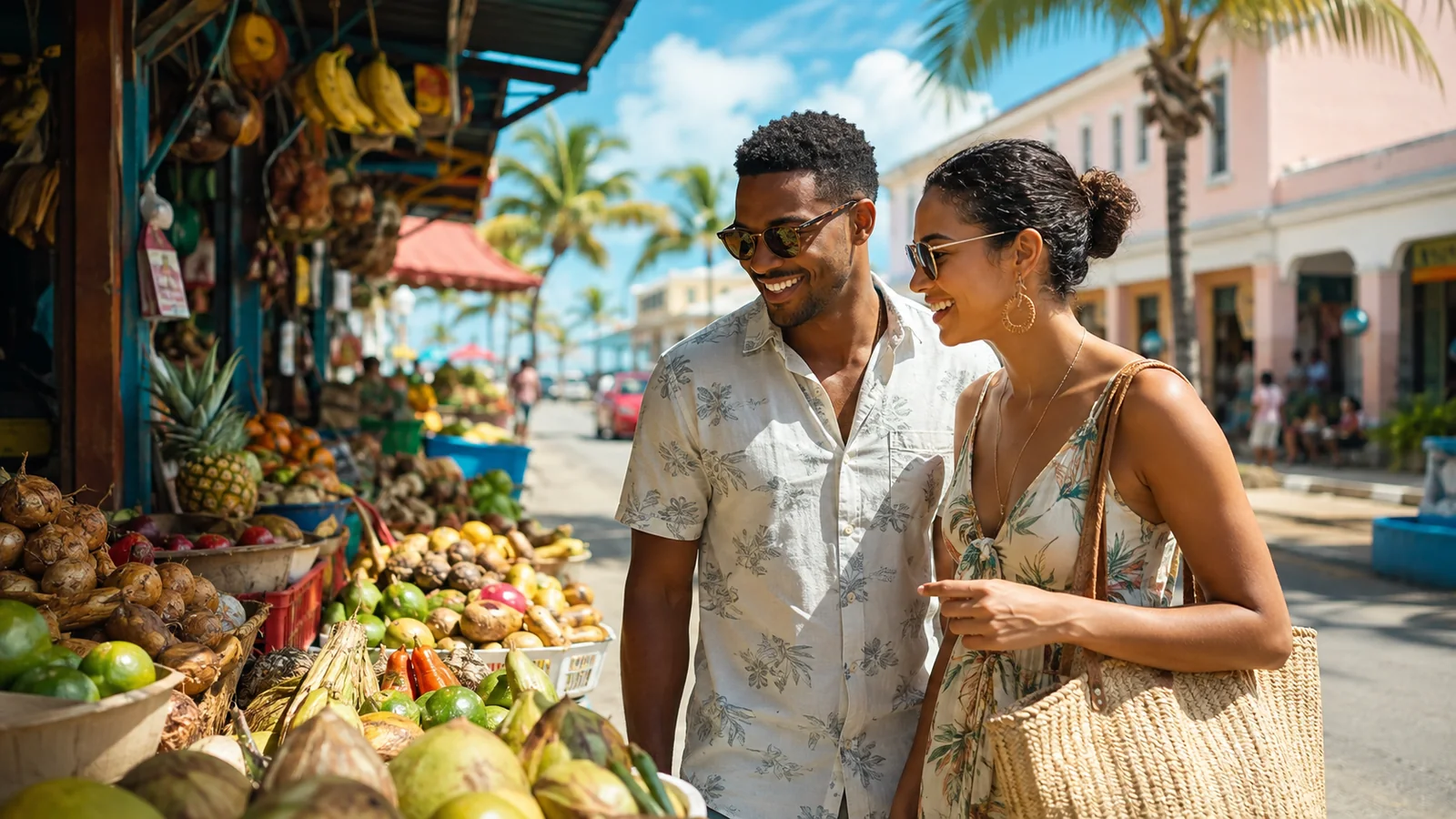
Markets, roadside food and local vendors
Markets and roadside vendors can provide some of the most memorable food experiences, but approach them as real local businesses rather than attractions staged for visitors. Ask what is available, follow the vendor's pace, carry small cash where appropriate and make sensible choices about food handling and hydration. If a creator or local guide leads you to a specific vendor, credit that source rather than presenting the discovery as Nomadic's own.
Ordering, payments and practical etiquette
Card acceptance varies by venue and island. Keep a modest amount of local cash for smaller vendors, confirm prices before ordering where they are not displayed and ask before photographing people or food preparation in intimate local settings. If you have allergies or dietary restrictions, save a clear written explanation on your phone as well as saying it verbally.
Dietary needs and planning ahead
Vegetarian, vegan, gluten-sensitive and allergy-aware options can be straightforward in some tourism areas and less predictable elsewhere. Contact important restaurants before the trip, carry any medically necessary supplies and do not rely on an automated translation or a social-media comment for a serious allergy. The aim is not to remove spontaneity; it is to make sure the non-negotiable parts are understood before you arrive hungry.
Digital Continuity for a food-led day
Curaçao is a strong self-drive destination, so mobile data has immediate practical value for maps, parking, restaurant reservations, beach navigation and route changes. Offline maps remain important because the best day trips often move away from the dense urban core.
Use data for directions, reservations, changing opening information and messaging, but save restaurant addresses and bookings offline too. A food itinerary works best when your connectivity supports spontaneity instead of forcing you back to hotel Wi-Fi every time plans change.
Questions travellers ask
Direct answers.
What food should I try in Curaçao?
Start with the local dishes in this guide, then ask what is seasonal and what the venue itself is known for rather than ordering only the most famous item.
Do I need cash for food?
Card acceptance varies. Keep some local cash for smaller vendors and markets even if you normally pay by card.
Should I reserve restaurants?
Reserve popular restaurants, chef experiences and festival dinners. Casual roadside and market eating is better approached with flexibility.