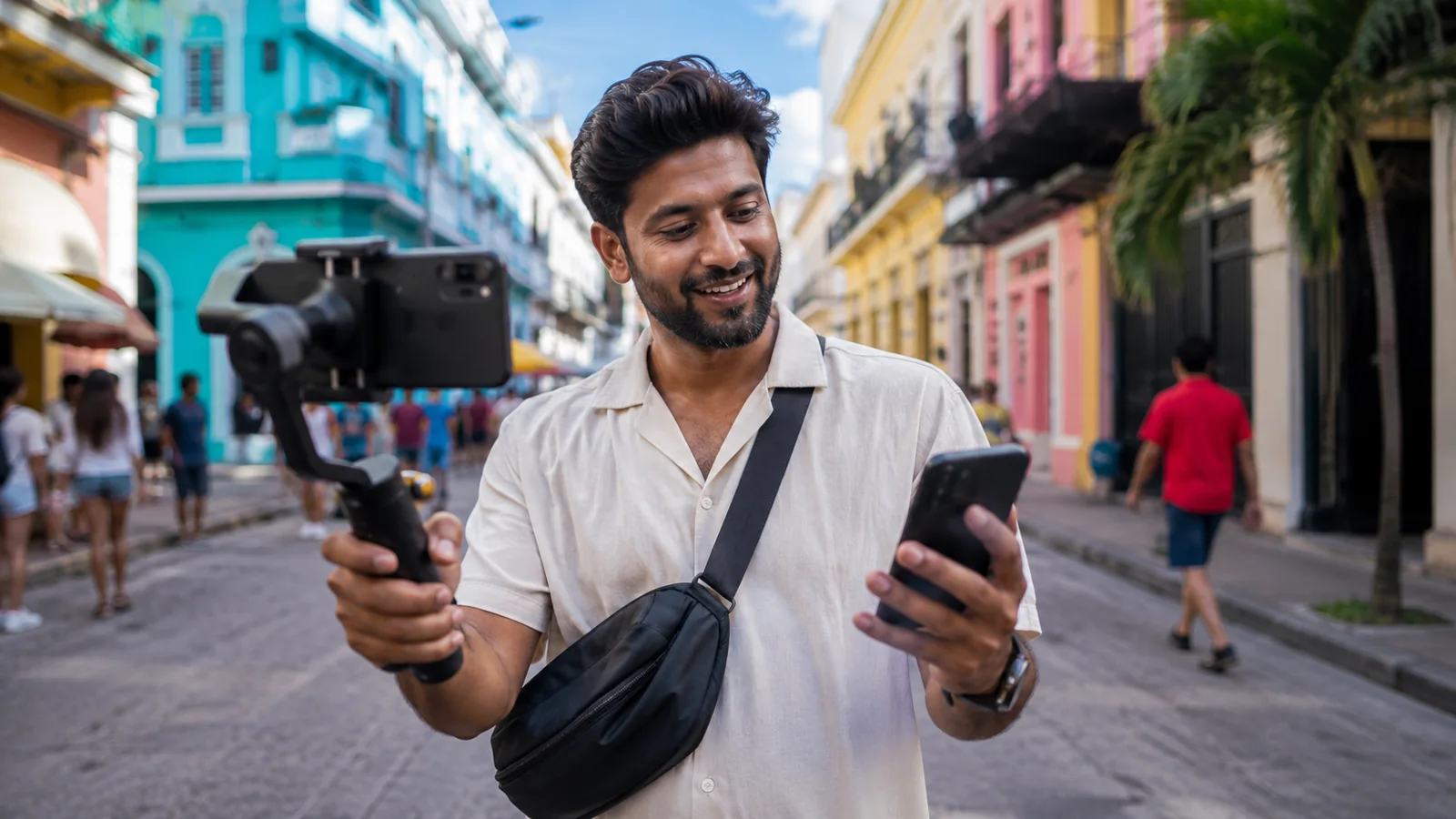


There is no single “right” amount of travel data because two people on the same seven-day trip can use completely different amounts. Someone who checks maps, messages family and occasionally browses the web may stay relatively light. A creator uploading video, a consultant tethering a laptop or a family streaming entertainment can move through data much faster.
The practical way to choose a plan is to start with what you actually do on your phone, then add enough headroom for the parts of travel that are hard to predict.
Start with your highest-data habits
Messaging, email and ordinary web browsing are usually the lighter part of the equation. Navigation can become significant when it is used throughout the day. Social media varies widely because scrolling text and photos is very different from watching reels or uploading original video. Video calls, streaming, cloud backups and hotspot use are normally the habits that change the estimate most.
- Light use: messages, email, occasional maps, ride or transit apps and basic browsing.
- Regular use: frequent navigation, social feeds, photo sharing, reservations, everyday browsing and some short video.
- Heavy use: streaming, video calls, uploads, cloud sync, remote work and hotspotting other devices.
Think about the trip in days
A short trip can be data-heavy if every day involves navigation, content sharing and work. A longer holiday can be lighter if much of the time is spent on dependable hotel or home Wi‑Fi. Ask how many hours each day you expect to be away from reliable Wi‑Fi and which apps you will need during those hours.
Arrival and travel days deserve special attention. Airport messaging, maps, transport apps, accommodation coordination and last-minute changes can make those days more connected than expected.
Use the Nomadic calculator as a starting point
The Nomadic data calculator lets you estimate usage from trip duration and common behaviours such as maps, browsing, social media, messages, video, calls and music. Treat the result as a planning estimate rather than a promise: apps change, video quality differs and background activity can add usage you do not notice immediately.
Reduce waste without changing the trip
You can cut unnecessary mobile usage without becoming disconnected. Download offline maps and entertainment on Wi‑Fi before leaving, pause automatic photo and video backups, review app background-data settings, avoid large operating-system updates on cellular data and use trusted Wi‑Fi for very large uploads when it is convenient.
If you work while travelling, remember that your laptop can use data differently from your phone. Cloud storage, software updates, browser tabs, video meetings and background synchronisation can make hotspot sessions much heavier than expected.
Choose based on how you travel
The best allowance is the one that lets you use your phone normally for the things that matter on the trip. Once you have an estimate, compare the current Nomadic eSIM plans for the destination, validity period and allowance that best match your journey.